Hatha Yoga in Thamel, Kathmandu
Practice Hatha Yoga in Thamel, Kathmandu with a steady blend of postures, breath awareness and relaxation. Beginner-friendly daily yoga for travelers and local practitioners.
- From NPR 1,000.00
- 60 min
About this service
The experience, the atmosphere, and what to expect when you arrive.
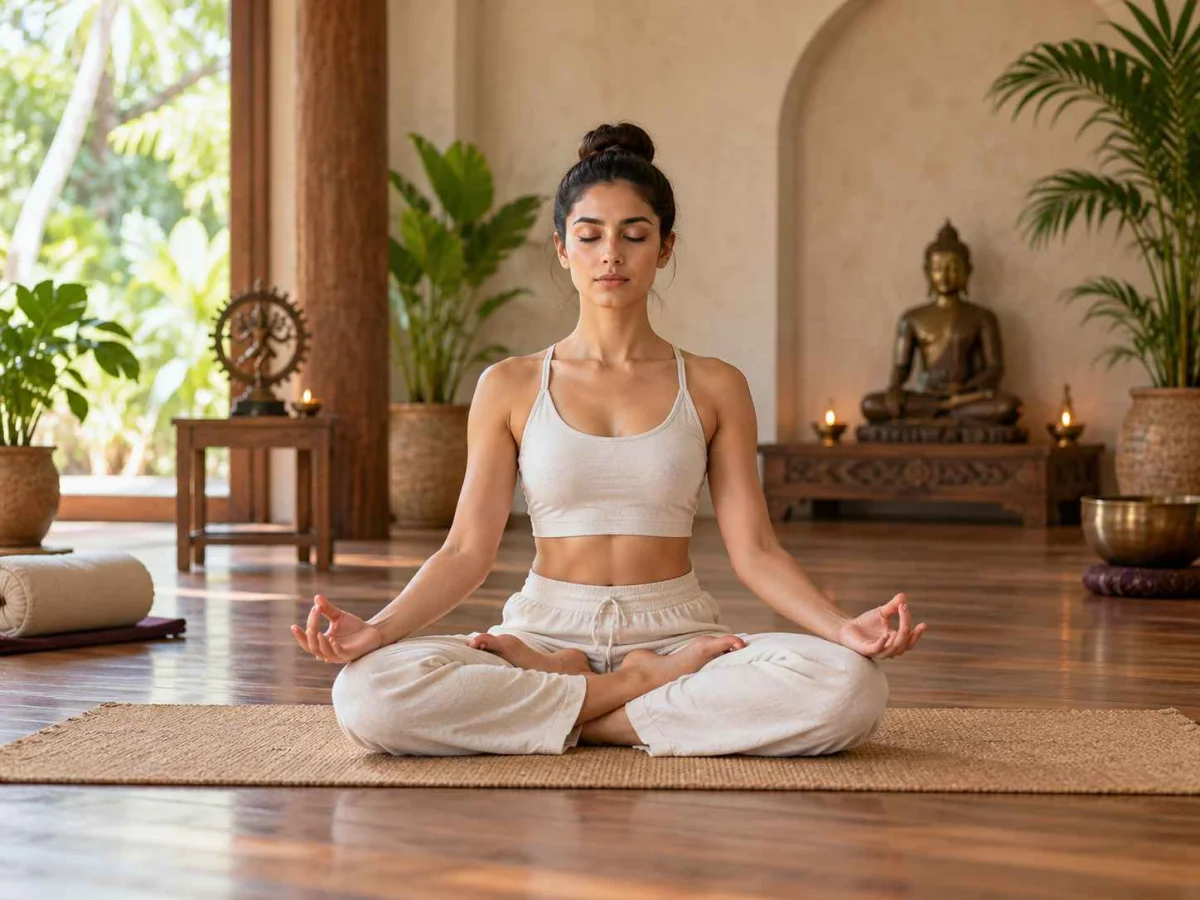
Practice Hatha Yoga in Thamel, Kathmandu with a steady blend of postures, breath awareness and relaxation. Beginner-friendly daily yoga for travelers and local practitioners.
Full description
Everything you need to know — in the studio’s own words.
Hatha Yoga in the Heart of Thamel
If you are looking for Hatha Yoga in Thamel, Kathmandu, this class offers a steady way to move, breathe and reconnect with your body without turning yoga into a race. Hatha Yoga gives you time to understand each posture, notice your breathing and work at a level that feels appropriate for you. It can suit complete beginners, regular practitioners, travelers spending a few days in Kathmandu and local students who want a consistent practice.
At Yoga in Thamel, we approach Hatha Yoga as more than a collection of stretches. A balanced class brings together physical postures, breath awareness, concentration and relaxation. Some days your practice may feel strong; on other days it may need to be quieter. The aim is not to force every student into the same shape, but to practice with attention.
What Happens in a Hatha Yoga Class?
A session normally begins by settling the breath and noticing how the body feels. Gentle movements may prepare the neck, shoulders, spine, hips, knees and ankles before the class moves into standing and seated postures. Depending on the group and teacher, the sequence can include Mountain Pose, forward folds, lunges, Warrior variations, Triangle Pose, balance poses, gentle backbends, twists and seated stretches.
The pace is usually more deliberate than a flowing class. That extra time matters. It allows you to notice whether you are holding your breath, collapsing into a joint or using more effort than necessary. A teacher can offer variations so a first-time student and an experienced practitioner can work with the same general posture in different ways.
Most classes finish by gradually reducing effort and allowing the body to become still. Final relaxation is not treated as an optional extra; it gives you a clear transition from active movement back to the rest of your day in Kathmandu.
Hatha Yoga for Beginners
You do not need previous yoga experience to begin. You also do not need to touch your toes, perform a headstand or know Sanskrit posture names. A beginner-friendly Hatha class teaches the practice step by step. The useful question is not “How far can I stretch?” but “Can I stay stable, breathe comfortably and pay attention?”
If a position feels too strong, reduce the range, use support or rest. Yoga becomes sustainable when you learn to respond to your body rather than compete with it.
Hatha Yoga for Travelers in Kathmandu
Travel changes your normal movement patterns. Flights, long-distance buses, backpacks, sightseeing and unfamiliar beds can all leave you feeling stiff. A yoga class creates a dedicated hour in which you are not planning the next bus, checking a map or carrying luggage. You simply move and breathe.
Thamel is a convenient base for many visitors to Nepal, so a drop-in class can fit around sightseeing, trekking preparation, shopping or a rest day. If you have just returned from trekking and want something slower, compare Hatha with Yin Yoga in Thamel. If you feel energetic and want continuous movement, explore Vinyasa Yoga.
Hatha Yoga vs Vinyasa Yoga
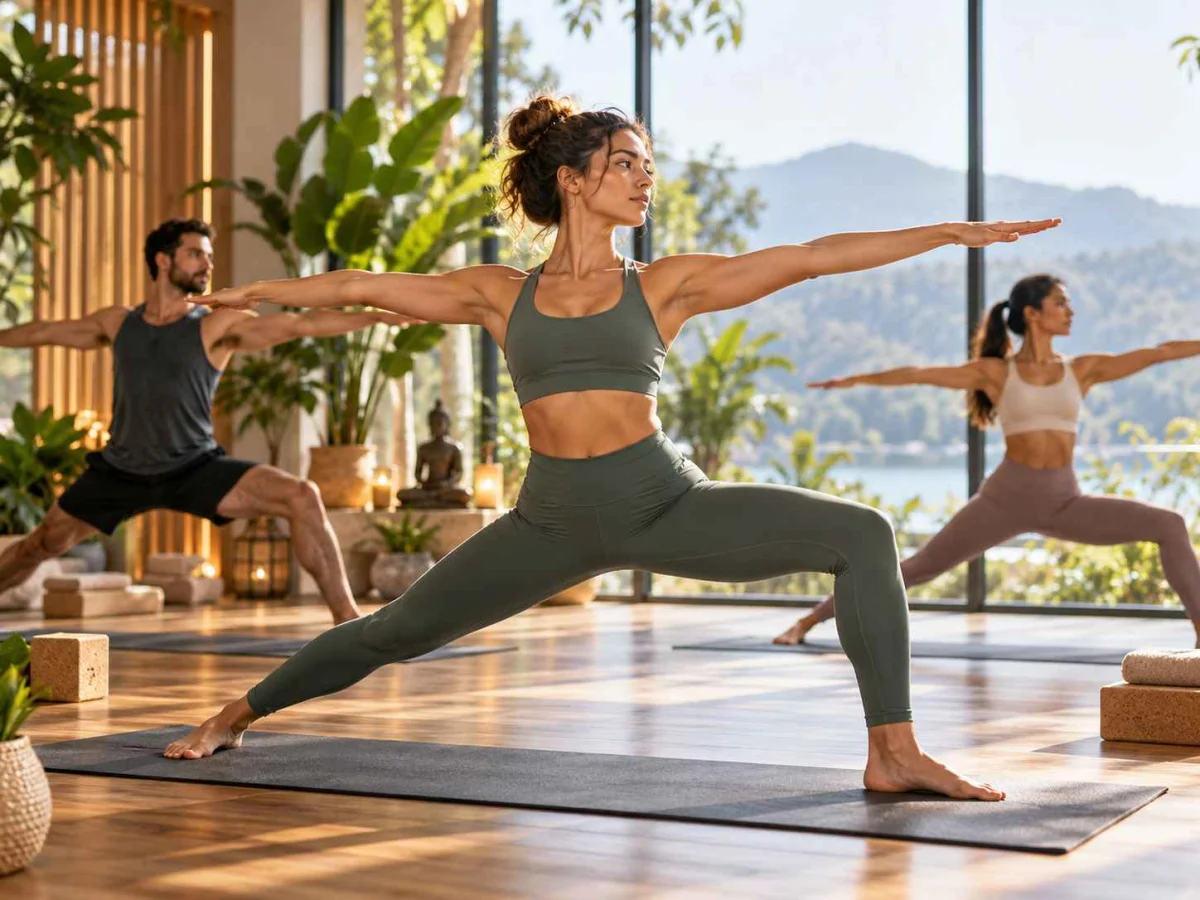
Hatha and Vinyasa often use many of the same postures, but the experience is different. In Hatha, you generally have more time to explore one posture before moving on. In Vinyasa Yoga, movement is linked more continuously with the breath. Neither style is better; the right class depends on your experience, energy and preference that day.
Hatha Yoga vs Yin Yoga
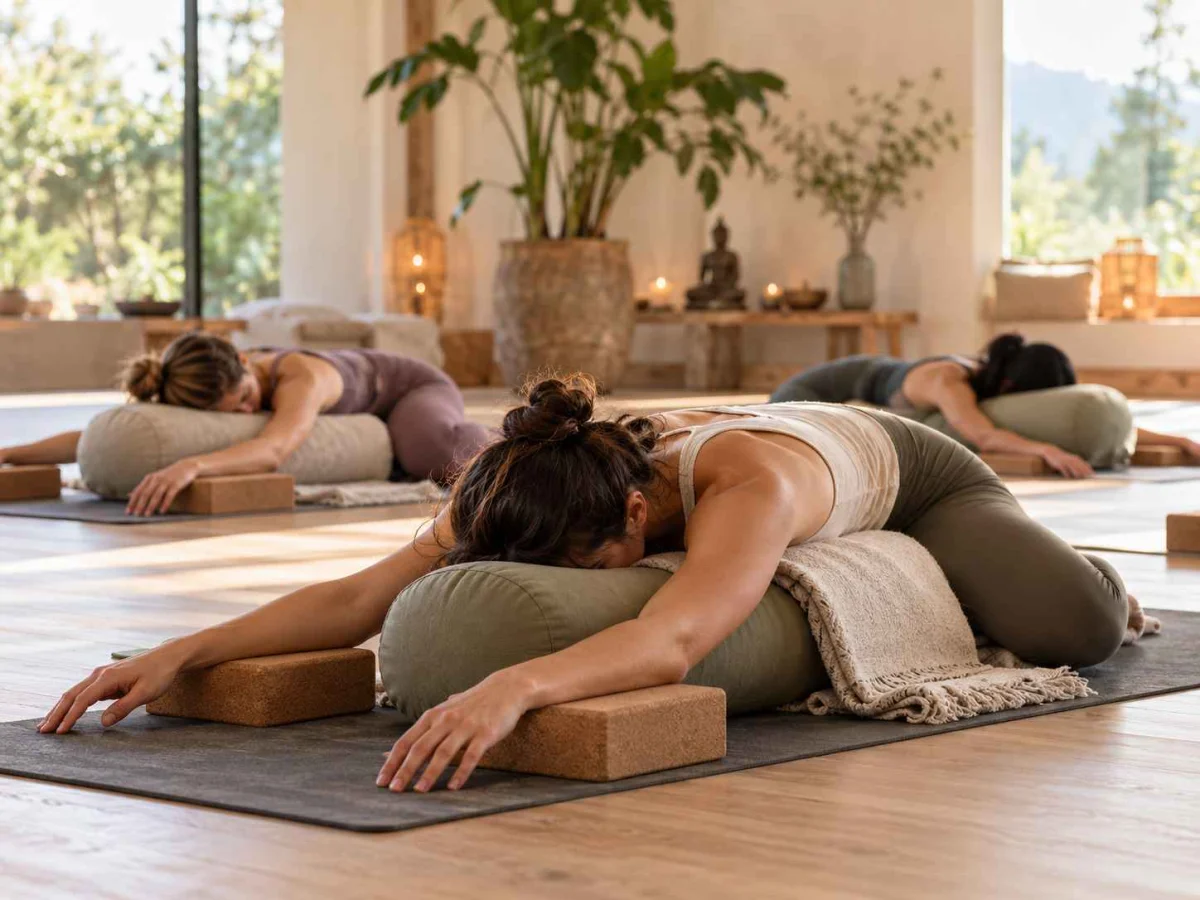
Yin Yoga is usually quieter and more floor-based, with postures held for longer periods. Hatha tends to use more active muscular engagement and a broader mixture of standing, balancing and seated poses. Many students benefit from practicing both rather than choosing only one style.
Breathing Is Part of the Practice
Yoga is not only about where your hands and feet go. The breath tells you a great deal about the quality of your practice. If you are constantly holding your breath or gasping through a posture, reducing the intensity may be more useful than pushing harder. The class encourages steady breathing and attention so physical movement and mental focus work together.
Yoga Before and After Trekking
Before a trek, Hatha Yoga can help you pay attention to balance, hips, ankles, legs and breathing, but it should not replace sensible trekking preparation. After a trek, choose intensity carefully. Tired muscles do not always need the deepest stretch. Gentle Hatha or Yin Yoga may feel more appropriate than an intense practice when you have just returned from several days on the trail.
Combine Hatha Yoga With Sound
Yoga and sound-based practices create different experiences. After movement, you may enjoy becoming still during a Sound Bath in Thamel. If you prefer a more attentive listening practice, try Sound Meditation. Travelers with limited time can also explore our yoga and wellness packages to combine complementary activities.
Who Can Join?
If you have a significant injury, recent surgery, pregnancy, a medical restriction or unusual pain, tell the teacher before class and follow appropriate medical advice.
Practice Hatha Yoga in Thamel, Kathmandu
Hatha Yoga does not require you to arrive as a flexible or experienced person. You begin with the body and breath you have today. From there, the practice can develop gradually through consistency rather than force.
Explore Hatha Yoga in Thamel, compare our other daily yoga and wellness services, or continue into yoga and sound healing training when you want a deeper study experience in Nepal.
Ready to practice? Book your Hatha Yoga class or contact Yoga in Thamel for the current schedule.
What Makes a Good Hatha Yoga Class?
A good Hatha class is not defined by how many poses are completed in one hour. It is defined by whether the sequence makes sense for the people in the room. Warm-up should prepare the body for stronger positions, standing work should build gradually, and the class should leave enough time to slow down at the end. Clear instructions, sensible options and attention to breathing are more valuable than trying to create a visually impressive sequence.
For beginners, the teacher should make it easy to understand where the hands and feet go without making the class feel overly technical. For experienced students, familiar postures can still become interesting when attention moves toward breathing, balance, stability and unnecessary effort.
Can Hatha Yoga Help You Build a Regular Practice?
Hatha is especially useful when you want a style that can be repeated consistently. Because the pace is moderate, you can learn common postures well enough to recognize them from class to class. That familiarity makes it easier to notice gradual changes instead of chasing a new sequence every day.
A regular practice does not need to mean seven intense classes a week. Two or three thoughtful sessions can be more sustainable than practicing hard for a few days and then stopping. Travelers can also use a drop-in class as a way to maintain movement while away from their normal routine.
Morning or Evening Hatha Yoga?
Both can work. A morning class can give your day a calm, deliberate beginning before Kathmandu becomes busier. An evening class can help you transition out of sightseeing, computer work or travel planning. Your best time depends on your schedule, energy and how your body responds.
If you practice early in the morning, allow time for the body to warm gradually. If you practice in the evening, you may prefer a balanced class that does not leave you overstimulated before sleep.
Can Hatha Yoga Support Better Posture Awareness?
Yoga should not promise to “fix” every posture problem, but it can make you more aware of how you stand, sit and move. Standing poses ask you to notice weight distribution through the feet. Seated work can reveal habits in the spine and hips. Balance poses show how quickly the body compensates when attention disappears.
That awareness can be useful for travelers carrying backpacks, office workers sitting for long periods and anyone who spends hours looking down at a phone.
Private Hatha Yoga vs Group Classes
A group class provides shared energy and is a practical choice for most students. A private session can be useful when you want more individual attention, have a very specific goal or need a slower introduction before joining a group. Neither option is inherently better.
If you are completely new to yoga and feel nervous about joining a class, remember that beginner-friendly group sessions are designed for people who are still learning. You are not expected to know the names of every posture before arriving.
How Hatha Yoga Fits Into a Kathmandu Wellness Routine
One of the advantages of practicing in Thamel is that yoga can sit naturally alongside other activities. You can practice in the morning, visit Kathmandu Durbar Square or Swayambhunath during the day, and choose a quieter evening activity later. You can also alternate yoga days with massage, Sound Bath or meditation rather than trying to do everything at once.
If your interest becomes deeper than daily classes, browse our training courses in Kathmandu. Training is different from a drop-in class because it gives more time for philosophy, anatomy, teaching methods, breathing practices and consistent study.
Common Questions Before a First Hatha Class
Should I eat before class?
A very heavy meal immediately before movement may feel uncomfortable. Many students prefer leaving some time between a substantial meal and yoga, while still eating and hydrating normally during the day.
What if I cannot do a pose?
Use a different version, reduce the range or rest. A posture is not a test you must pass.
What if I feel stiff after trekking?
Tell the teacher and practice gently. Tightness after prolonged activity does not mean you should force deep stretches.
Can older adults join?
Age alone does not determine suitability. Current mobility, health conditions and class intensity matter more. Discuss relevant concerns before class.
Why Choose Yoga in Thamel?
Our location focus is simple: make authentic, approachable yoga easy to include in a stay in central Kathmandu. The service page is written for people actually searching for Hatha Yoga in Thamel, not for a generic audience somewhere else. That means practical details for tourists, trekkers, local students and people comparing yoga styles are part of the experience from the beginning.
Session options & pricing
Pick the session length that fits your schedule — tap any option to start booking.
Where to find us
Yoga Thamel welcomes you in Kathmandu, Nepal.
 Related service
Yin Yoga in Thamel, Kathmandu
Slow down with Yin Yoga in Thamel, Kathmandu. Explore longer-held floor-based postures, quiet breathing and mindful stillness in a clas…
View details
Explore
 Related service
Vinyasa Yoga in Thamel, Kathmandu
Join Vinyasa Yoga in Thamel, Kathmandu for a breath-led flowing practice that develops movement awareness, balance, strength and focus…
View details
Explore
Related service
Ashtanga Yoga in Thamel, Kathmandu
Practice Ashtanga Yoga in Thamel, Kathmandu through a structured sequence that combines breath, focused movement, repetition and discip…
View details
Explore