Sound Meditation in Thamel, Kathmandu
Explore Sound Meditation in Thamel, Kathmandu through mindful listening, breath awareness and Himalayan singing bowls in a beginner-friendly meditation experience.
- From NPR 2,000.00
- 60 min
About this service
The experience, the atmosphere, and what to expect when you arrive.
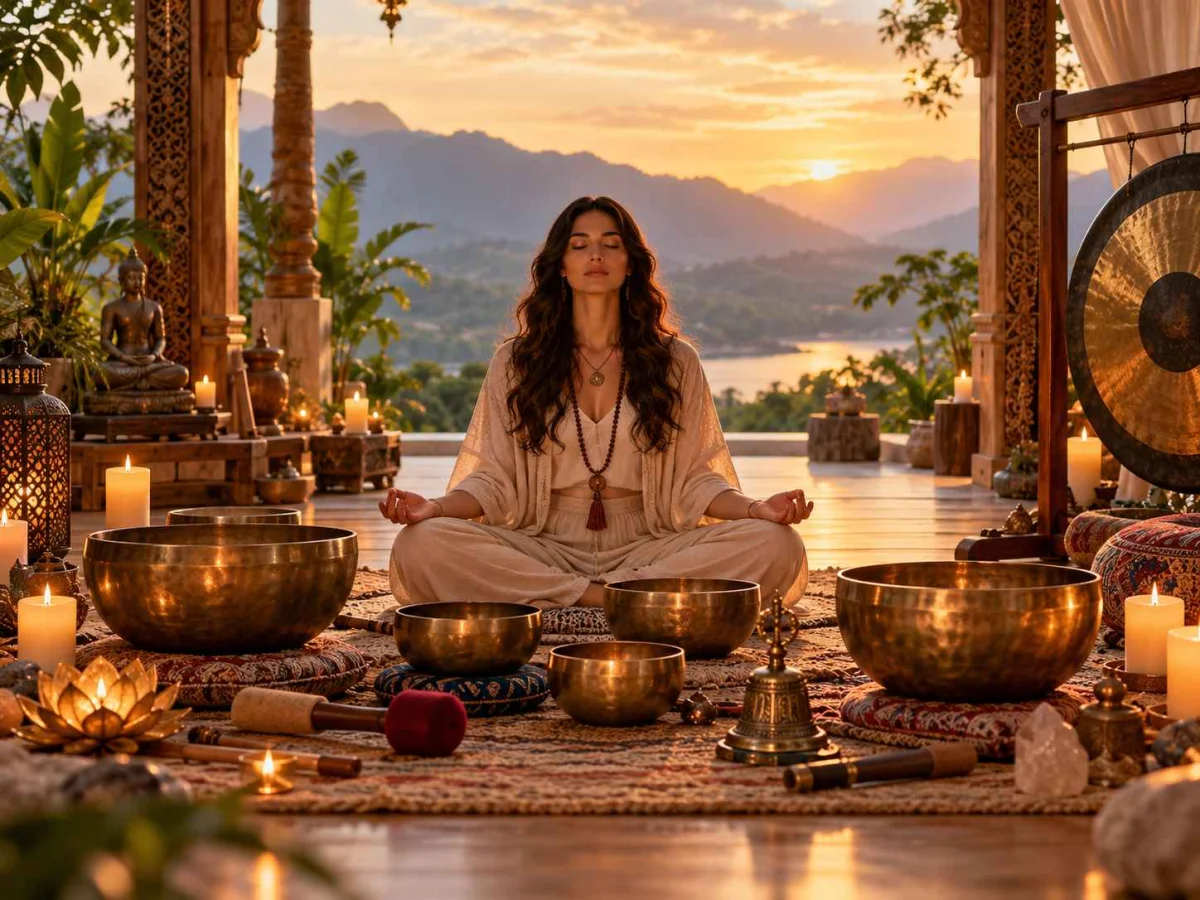
Explore Sound Meditation in Thamel, Kathmandu through mindful listening, breath awareness and Himalayan singing bowls in a beginner-friendly meditation experience.
Full description
Everything you need to know — in the studio’s own words.
Meditation Through Listening
Sound Meditation in Thamel, Kathmandu uses listening as a practical anchor for attention. Rather than trying to make the mind completely blank, you notice sound, notice when attention has wandered and return. Himalayan singing bowls provide a clear sensory focus as tones begin, change and disappear.
This can be especially accessible for beginners who find silent meditation frustrating. The goal is not to stop every thought. The practice is recognizing where attention went and learning to return without turning that moment into a failure.
What Happens During a Session?
You begin by getting comfortable and noticing natural breathing. The facilitator may then introduce sound gradually. You can listen to the attack of a bowl, the changing overtones, the way several sounds interact and the quiet that remains after a tone fades.
Some sessions include more verbal guidance; others leave longer spaces for direct observation. You do not need previous meditation experience.
Sound Meditation vs Sound Bath
Sound Bath and Sound Meditation can use similar instruments, but the participant's intention may differ. A Sound Bath often emphasizes receiving the sound while resting. Sound Meditation usually asks you to engage more consciously with attention, breathing and listening.
Why Sound Helps Beginners
A common beginner concern is, “I cannot meditate because I keep thinking.” Thinking is not proof that meditation failed. Sound gives you something clear to return to. You hear the bowl, notice that your mind moved somewhere else, and listen again. That repeated return is the training.
Sound Meditation for Travelers
Travel creates constant mental tasks: transport, maps, hotels, money, messages and itineraries. A meditation session creates a period in which nothing needs to be solved. For people staying in Thamel, that can be a valuable contrast to the activity outside.
Combine Sound Meditation With Yoga
Movement can make sitting or lying still feel more natural. Try Hatha Yoga for a steady physical practice, Vinyasa Yoga when you want flow, or Yin Yoga when you want a slower lead-in to meditation.
From Experience to Training
If you become interested in the instruments, a meditation session can be a starting point rather than the end. Our One-Day Sound Healing Training introduces basic bowl handling and playing, while Basic Sound Healing Teacher Training provides more structured practice.
Who May Enjoy Sound Meditation?
What to Wear
Wear comfortable clothing. You do not need a special meditation outfit or the ability to sit in Lotus Pose. Comfort supports attention better than trying to hold an impressive position.
Practice Sound Meditation in Thamel
Meditation can begin with something as ordinary as listening carefully. Sound gives the mind a clear place to return, while silence between tones becomes part of what you learn to notice.
Explore Sound Meditation in Thamel, compare it with a Sound Bath, or browse sound healing training in Kathmandu.
Book your Sound Meditation session or contact us for availability.
What Do You Focus on During Sound Meditation?
You can focus on several aspects of the same sound: when it begins, how loud it is, how it changes, where you perceive it in the room and the moment it becomes silence. You may also notice your breathing or physical contact with the mat or chair. The sound is an anchor, not something you need to analyze intellectually.
What Happens When the Mind Wanders?
You notice it and return. That sounds simple, but it is the central skill. A wandering mind does not mean you are bad at meditation. The moment you recognize distraction is actually a moment of awareness. Sound makes the return concrete because there is something audible waiting for your attention.
Sound Meditation vs Guided Meditation
A guided meditation relies heavily on spoken instructions, imagery or prompts. Sound Meditation may use some verbal guidance at the beginning but gives more space to direct listening. People who find constant talking distracting may enjoy that balance.
Sound Meditation vs Nada Yoga
Nada Yoga is a broader yogic tradition centered on sound and inner listening. Contemporary singing-bowl meditation can overlap with that interest, but a single Sound Meditation session should not be presented as equivalent to mastering the complete philosophy and practice of Nada Yoga. If deeper study interests you, treat the session as an introduction rather than a complete system.
Can You Meditate Lying Down?
Yes. Sitting can support alertness, while lying down can be more comfortable for some bodies. The trade-off is that you may become sleepy more easily. The best position is one that lets you remain reasonably comfortable without making physical discomfort the only thing you can think about.
Sound Meditation After Yoga
Yoga can make meditation feel more accessible because you have already spent time bringing attention into the body. A moderate Hatha class can prepare you to sit, while Yin Yoga creates a slower bridge toward stillness. Strong Vinyasa can also work, provided you leave time for breathing to settle.
Sound Meditation for Digital Nomads and Remote Workers
Thamel and Kathmandu attract travelers who continue working online. Long hours of screens, calls and messages can make the mind feel continuously occupied. A meditation session does not solve workload, but it creates a defined period when you are not required to respond to notifications or produce anything.
Can Sound Meditation Improve Concentration?
Meditation is a practice of repeatedly directing attention, so concentration is part of what you exercise. We avoid promising a guaranteed cognitive outcome. The more grounded claim is that the session gives you structured practice in noticing distraction and returning to a chosen focus.
How Long Should a Beginner Meditate?
You do not need to begin with very long sessions. A guided class provides structure, but at home you can start with a few minutes of intentional listening. Consistency is often more useful than immediately forcing yourself into an hour of stillness.
Using a Singing Bowl at Home
If you own a bowl, use it simply at first. Produce one clear tone and listen until it fades. Notice the silence that follows. You do not need to create complicated “healing sequences” before learning basic control. If you want hands-on instruction, our one-day training is designed as an entry point.
Meditation Without Exaggerated Claims
Sound Meditation can be calming and meaningful, but responsible wellness content should not tell people that bowls cure medical or psychological disorders. If you are dealing with a health condition, use qualified professional care. Meditation can be part of your personal wellness routine without being marketed as a replacement for treatment.
Practice in Kathmandu, Continue Anywhere
One advantage of meditation is portability. You can learn the basic method in Thamel and continue it later without special equipment. The bowl helps teach listening, but attentive awareness can continue with ordinary environmental sound, breath or silence.
How Is Sound Meditation Different From Listening to Music?
Music often invites you into melody, rhythm, memory and emotion. Sound Meditation can be much simpler. You may listen to a single sustained tone without needing to decide whether you like it. The practice is the quality of attention rather than entertainment.
Can Couples or Friends Meditate Together?
Yes. Sharing the same session can be meaningful even though each person has a private internal experience. You do not need to synchronize thoughts or breathing. The shared element is simply the sound environment and the period of intentional quiet.
What If You Fall Asleep?
It can happen, especially when lying down after travel or trekking. If your main intention is meditation, sitting more upright may help you remain alert. If you doze briefly, do not turn it into a problem; simply return to listening when you notice.
Session options & pricing
Pick the session length that fits your schedule — tap any option to start booking.
Where to find us
Yoga Thamel welcomes you in Kathmandu, Nepal.
